
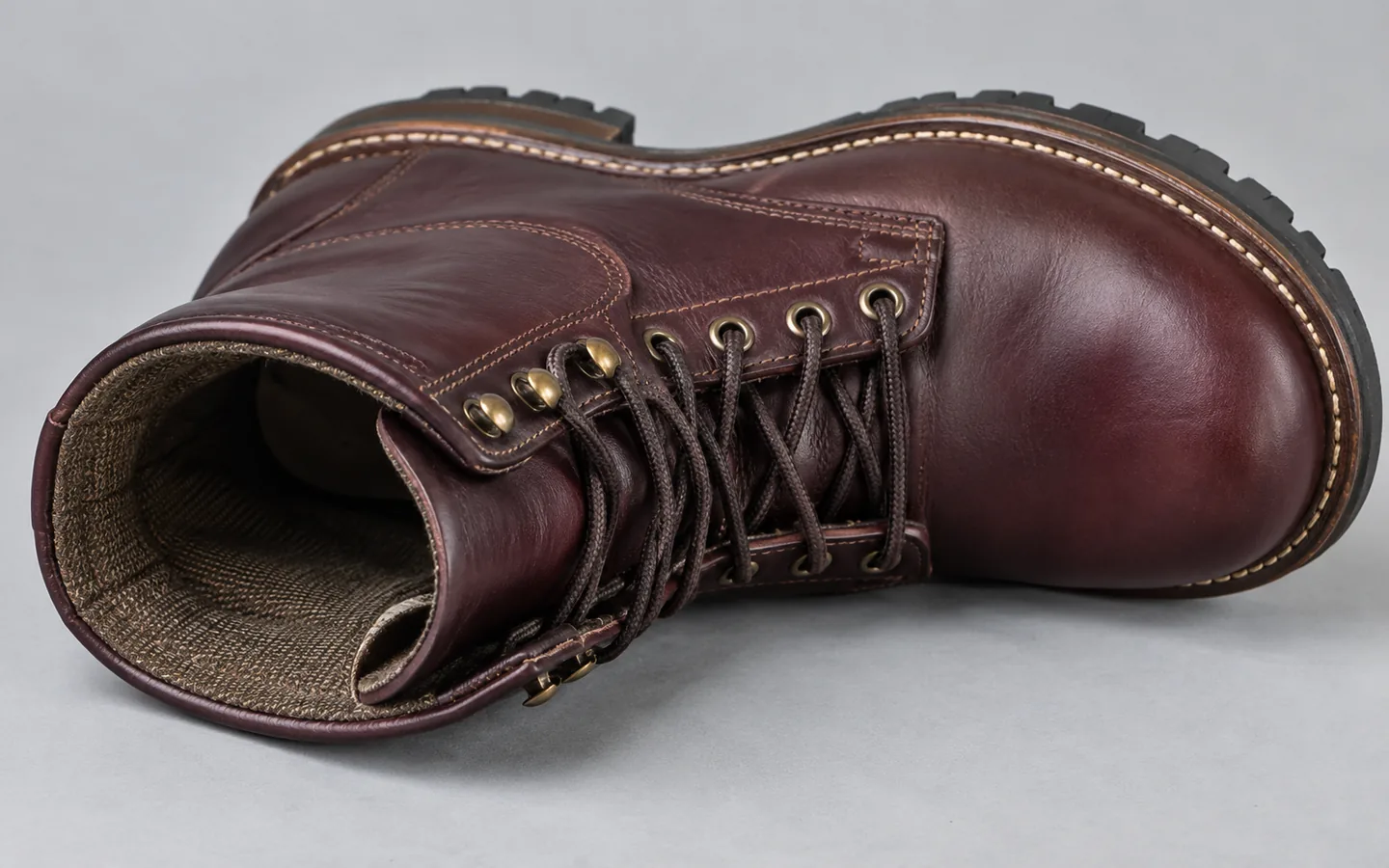
When two leather safety boots look similar in a catalog, an industrial buyer should compare more than the upper colour and boot shape before placing a bulk order. Construction, lining, outsole, toe and midsole entries, size range and product documents can differ materially between models.
This informational guide explains how to prepare a leather safety boot specification and sample review. It does not replace the commercial leather safety boots category, which remains the place to compare available models and open their individual product pages.
1. Start With The Leather Specification
The current catalog contains leather descriptions including nubuck, split nubuck, embossed leather and action leather, as well as other model-specific leather descriptions. These names should be copied accurately into the buyer specification rather than treated as interchangeable. The selected upper should be checked against the model record, intended environment and sample.
A material name does not establish a universal durability, waterproofing or performance claim. Buyers should define the expected working environment, cleaning approach and finish requirements, then ask the supplier to confirm the exact construction available for the order.
2. Check More Than The Upper Material
A leather upper is only one part of a safety boot. Review construction, lining, outsole, toe component, midsole, insole and size range together. Two products can use leather uppers but differ in outsole construction, protective components and documentation status.
The commercial category provides product cards and direct model links. This guide helps the buyer decide what to compare before choosing among those models or requesting a customized configuration.
3. Toe Protection Options
Steel and composite toe configurations should be reviewed as model-specific purchasing requirements. Buyers should identify the component listed for the chosen model, required documentation and the final order configuration. Do not assume that all leather safety boots use the same toe material or that one model's information applies to another.
Where a buyer has a metal-free requirement, the complete footwear construction must be checked. A component label alone does not confirm the full finished boot is metal-free.
4. Midsole Configuration
The same model-level approach applies to midsoles. Catalog entries may list steel, composite, Kevlar or another configuration, while some records require further confirmation. The buyer brief should identify the requested midsole component and the workplace reason for it, rather than using a general anti-puncture label.
If the final product changes a protective component, the buyer should confirm the associated specification, sample and documentation requirements before production.
5. Compare Outsole Constructions
The current catalog includes PU, rubber, PU/rubber and EVA/rubber constructions across different footwear models. Leather safety boot buyers should compare the outsole actually listed for each candidate model and the conditions it is intended to address. Material names should not become broad promises about heat, oil, chemical or slip performance.
Use the PU-versus-rubber article for a deeper material comparison, then return to the individual product record and sample for the final selection.
6. Lining And Internal Construction
Lining, insole, internal fit and finished construction affect sample evaluation. Some catalog models list a lining material, while others state that it is not specified in the catalog. Where a record is incomplete, buyers should mark that field for confirmation rather than infer it from another leather boot.
Ask the supplier to confirm the selected model's lining, insole and construction details in the approval record. This is especially important when a buyer is comparing visually similar products.
7. Size Range And Order Mix
A listed size range is not the same as a bulk-order size breakdown. Buyers should confirm which sizes are required, the quantity by size, fit expectations and sample sizes before issuing a purchase order. Do not assume a fixed company-wide sizing policy beyond the range recorded for the exact model.
The approved sample should be reviewed in a representative size where possible. Record any fit feedback and confirm the final size mix in the production specification.
8. Check Protection Class And Documentation By Model
Leather Safety Boots is a commercial category, not a single protection class. Buyers must not assume every model carries the same classification, certification, standard or test documentation. Review the model-level product record, required market documents and final construction together.
Where a class, standard, certification or lining is not specified in the catalog, keep it as a confirmation point. This avoids applying information from a similar leather boot to the product actually being ordered.
9. What Should Buyers Check On A Sample?
Compare the sample with the written order brief: leather and finish, stitching, construction, outsole, fit, size, toe and midsole configuration, product identification and supplied documents. Check the visible build and the recorded specification together; neither is enough on its own.
A workplace trial may provide useful feedback on fit and movement, but it does not replace model-level documentation or technical review. Record sample changes before moving to bulk production.
10. OEM Specification Confirmation Before Production
For a leather safety boot order, lock the selected model or confirmed construction, upper, lining, outsole, toe, midsole, size mix, colour, logo, packaging and required documents before production. This is narrower than a full OEM sourcing guide, but it keeps the leather boot order from drifting away from the approved sample.
Future Tech can discuss upper and sole materials, protective components, colours, logos and packaging for OEM or ODM projects. Feasibility and documentation are confirmed for the selected project rather than presumed from a general category name.
11. Leather Safety Boots Bulk Order Checklist
A final checklist helps distributors and procurement teams compare like with like before confirming the order.
- Exact leather description and model
- Outsole, toe and midsole entries
- Lining and insole confirmation
- Protection class and documents by model
- Size range and quantity by size
- Approved sample and final configuration
- Branding, packaging and order reference
12. Compare Available Leather Safety Boot Models
Use the leather safety boots category to review the current product cards and open the applicable model pages. The category serves commercial comparison intent; this guide serves the informational procurement process that should happen before a model is approved.
When requesting a review, share the intended work environment, target market, required components, preferred upper and outsole, size mix, quantity and documentation needs. That gives the supplier a concrete brief without making unverified claims about every leather boot.