
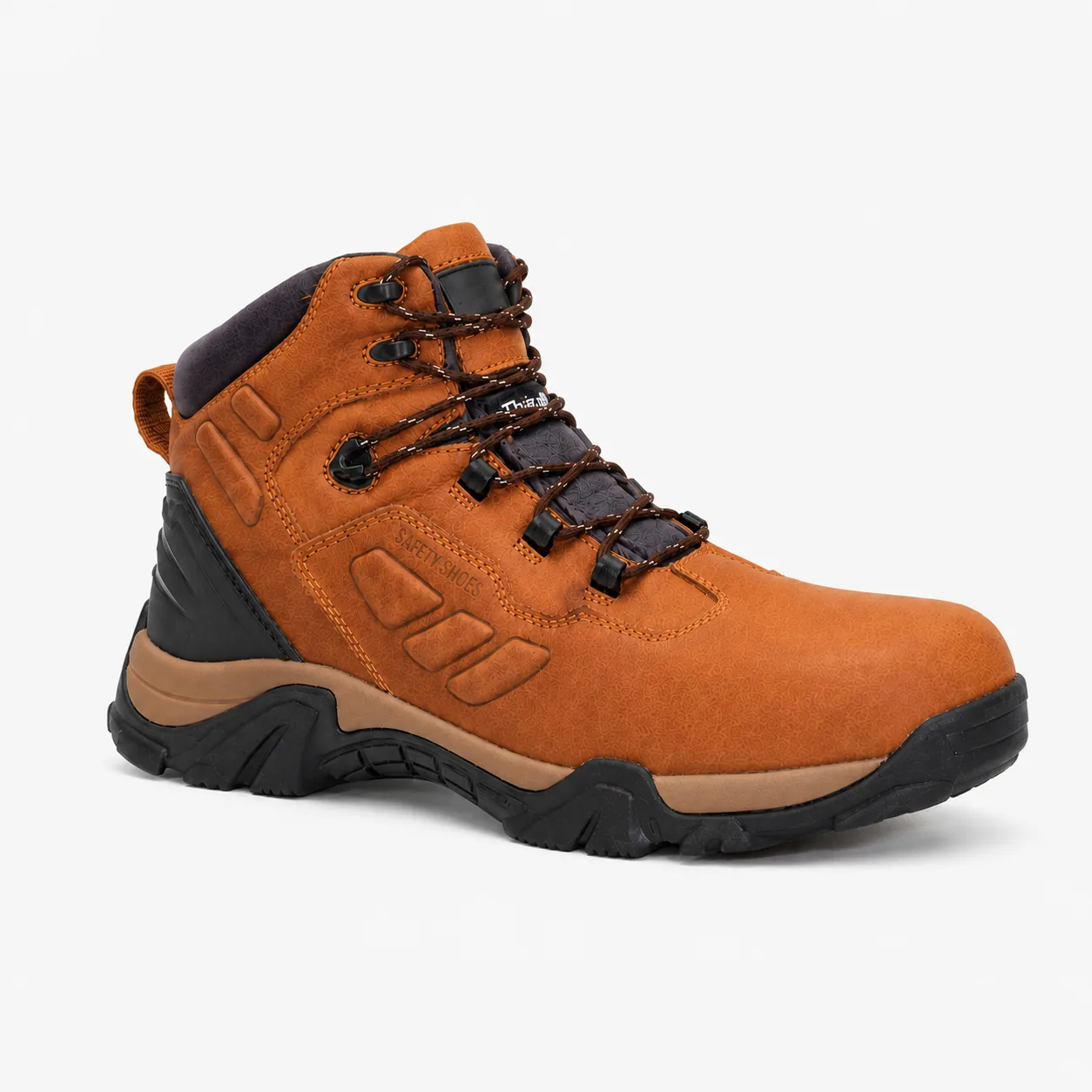
In an RFQ, the phrase upper material: leather is often too broad to control the product a buyer will receive. Material type, finish, thickness, reinforcement, lining and the way the upper is combined with the sole can all change the final product reference.
For industrial buyers, an upper-material discussion should be a controlled comparison rather than a claim that one material is always superior. The current catalog uses terms including embossed leather, nubuck action leather, black action leather, nubuck leather, split nubuck leather and suede leather. The selected model and approved sample remain the basis for a bulk-order decision.
1. Why The Upper Material Entry Matters
The upper affects the product's appearance, surface feel, flexibility and the way a buyer describes the specification. It can also interact with lining, toe construction, outsole attachment and intended work environment. For this reason, material should be named as precisely as the available model record allows.
Do not convert an upper material name into an automatic promise about water exposure, breathability, abrasion performance or price. Those considerations depend on the complete construction, selected configuration and conditions of use.
2. Use The Catalog's Actual Material Terms
Current product records provide several distinct terms. FT-2003 lists embossed leather; FT-2203 lists nubuck action leather; FT-4008 lists black action leather; FTSS-15 lists nubuck leather; FT2201 lists suede leather; and FTSS-09 lists split nubuck leather. These terms should not be silently treated as interchangeable.
A buyer can use these records to start a comparison, then ask for the exact model sheet and sample. The material vocabulary in the RFQ should match the selected model rather than a broad marketing phrase.
3. Leather, Nubuck And Suede In A Buying Brief
Leather-based upper descriptions may help the buyer distinguish appearance, finish and sourcing preference. Nubuck and suede terms should be specified exactly as shown for the model, because a nubuck action leather record is not the same as a nubuck leather or suede leather record.
The appropriate choice depends on the intended environment, maintenance approach, appearance target, construction and approved sample. Avoid statements such as leather is always better, suede is always more breathable or nubuck is waterproof unless the finished-model evidence supports the particular claim.
4. Action Leather And Finished Appearance
Action leather terminology is present on FT-2203 and FT-4008, with different catalog descriptions: nubuck action leather and black action leather. These references can guide a buyer who needs a particular surface appearance or product positioning, but they do not establish identical durability or environmental performance.
When color, finish or branding matters, include it in the sample approval process. A written material name should be paired with the approved physical reference and any agreed color standard.
5. Consider The Whole Construction
The same upper type can appear with different toe components, midsoles, linings and outsoles. FT-4008, for example, lists a black action-leather upper with composite toe and midsole, breathable mesh lining and a PU/TPU outsole. FTSS-15 lists nubuck leather with a 200J steel toe, 1100N steel midplate, breathable mesh and MD+Rubber cementing.
These catalog records illustrate why an upper should be evaluated alongside the rest of the specification. They are not a claim that either model suits every workplace or every protection requirement.
6. Specify Upper Materials In The RFQ
An RFQ should identify the product reference, exact upper terminology, required color or finish, relevant lining preference, outsole construction, protection configuration, sizes, quantity and destination-market documentation. This makes quotations easier to compare and reduces reliance on assumptions.
If the project is OEM, also record logo treatment, packaging and any approved reference material. Ask which elements are fixed on the catalog model and which may be configurable, then validate changes through a sample.
- Selected model or approved reference
- Exact upper-material terminology
- Color, finish and branding requirement
- Lining and outsole construction
- Toe and midsole configuration
- Sample, documentation and packaging approval
7. Review Samples Before Bulk Production
A physical sample lets the buyer inspect the surface, color, stitching, flexibility, lining and overall construction. It is also the place to compare the written RFQ against the finished product. Photo references alone may not show the characteristics relevant to an industrial purchase.
If a sample revision changes the upper, finish or construction, update the written specification and reapprove the reference. This is more reliable than assuming that a similar material on another model will produce the same result.
8. Balance Positioning, Consistency And Maintenance
Material decisions can affect how a product is positioned for a distributor's customers and how it is maintained in the intended setting. Buyers may also consider color consistency, finish, care expectations and repeat-order availability. These are purchasing questions to discuss with the supplier, not universal properties of a material name.
For repeat supply, retain the approved material description, sample record and model reference. That record helps identify whether a future quotation matches the original approved construction.
9. Compare Like With Like During Sourcing
When quotations use different material wording, request clarification before comparing price or lead-time terms. A buyer should identify whether the proposed upper is the same catalog material, an alternative finish, or a new configurable option. The supplier response and sample should be tied back to that question.
This discipline avoids an apparent material match masking a change in the complete construction. It also protects the buyer from carrying an unsupported product description into sales literature or a customer specification.
10. Preserve The Approved Reference For Repeat Orders
Once the material and finished sample are approved, keep the model reference, material terminology, finish notes, photographs and sign-off together. This gives a buyer a basis for reviewing future production or a replacement quotation without assuming that a similar-looking upper is the same construction.
For branded programs, the reference can also support a consistent discussion of color, logo application and packaging. Any change should be documented and approved before it is carried into bulk production.
11. Document Material Change Control
A material change should be identified as a change even when the replacement looks similar in a product image. The buyer can ask the supplier to confirm the exact material term, affected construction details, revised sample need and any documentation that must be reviewed for the final model.
Keeping this check within the RFQ and approval record helps the purchasing team prevent an informal substitute from becoming the assumed repeat-order standard. It also gives a distributor a clearer basis for describing the supplied product to its own industrial customer.
12. A Practical Conclusion For Buyers
The best upper-material specification is precise enough to control the selected product, yet careful enough not to make unsupported performance promises. Use the catalog's actual material terminology, evaluate the full construction and confirm the final sample before bulk production.
This approach gives an industrial buyer a clearer RFQ, a more meaningful sample review and a stronger record for repeat orders.