
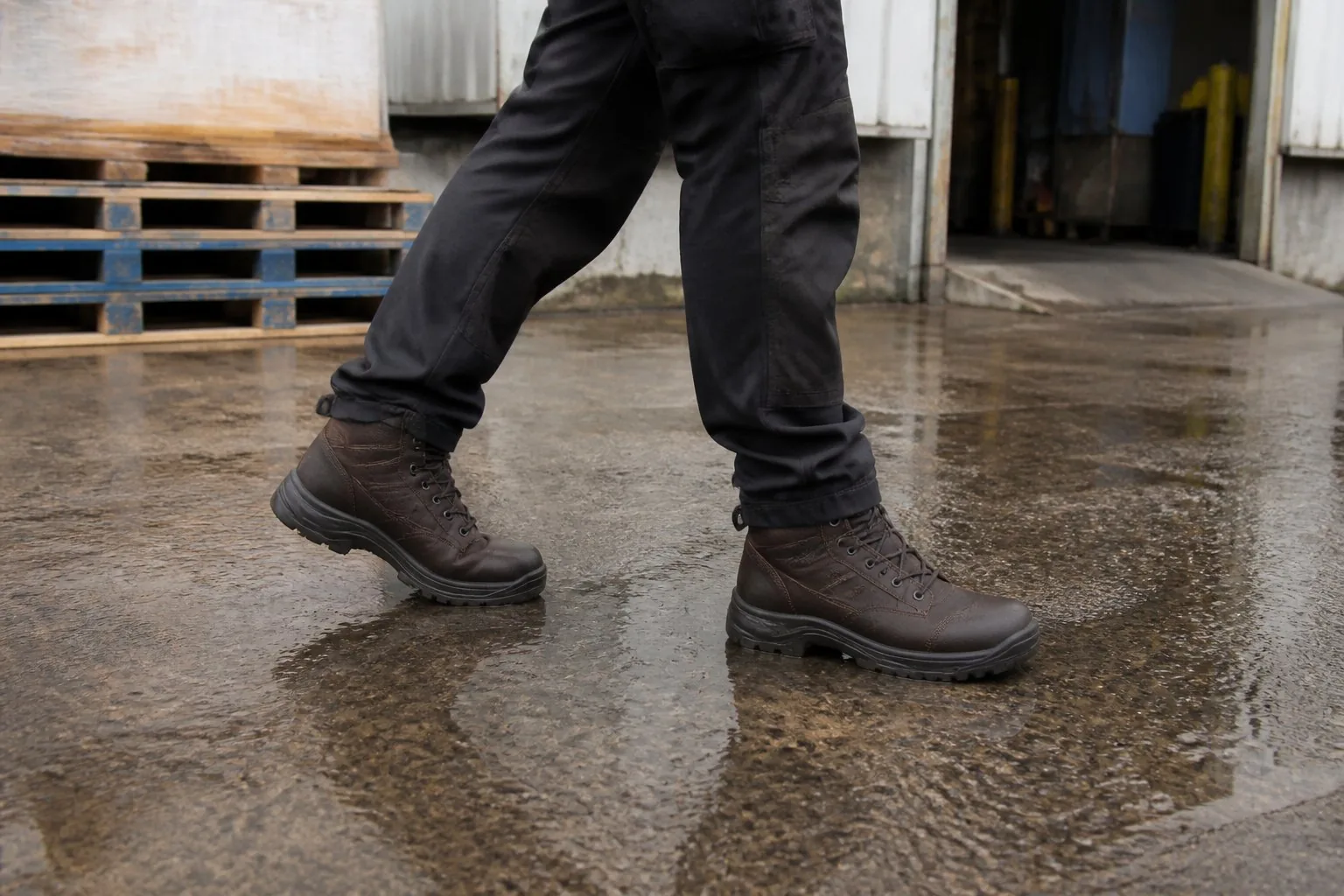
S1P and S3 are safety-footwear classifications used to communicate different sets of requirements. Buyers should not select between them by name alone: the applicable EN ISO 20345 edition, workplace conditions, exact model marking and supporting documents all matter.
The practical decision is usually driven by indoor or outdoor use, expected water exposure, penetration hazards, floor conditions and the construction of the complete shoe.
1. Start With The Standard Edition
Confirm which edition of EN ISO 20345 applies to the destination market and procurement program. Markings and test references can change between editions, so a comparison table should always be read in that context.
Every product currently displayed on this website is EN ISO 20345 and CE certified. A specific S1P or S3 claim still needs to be verified for the exact model.
2. Understand What The Classification Covers
A classification combines several footwear requirements. It does not replace the technical sheet, and it does not describe every material, outsole or comfort characteristic.
Check the full marking together with the toe cap, anti-puncture construction, outsole information and product identification.
3. Compare The Working Environment
Use the risk assessment to decide which model and classification should be reviewed.
- Indoor or outdoor work
- Expected contact with water
- Penetration hazards
- Smooth, wet, oily or uneven floors
- Walking distance and shift length
- Customer or destination-market requirements
4. Do Not Choose By Classification Alone
Two products with the same class can use different upper materials, toe caps, midsoles and outsole constructions. These differences affect fit, weight, flexibility and suitability for a particular job.
Review an approved sample when daily movement or fit is important to the purchasing decision.
5. Request Model-Specific Evidence
Ask for the technical specification, applicable standard edition, product marking and relevant test or certification documents. Make sure the model name on the documents matches the product being ordered.
If the product is customized, confirm which changes require renewed testing or documentation before production.
6. Use A Buyer Decision Checklist
Record the work environment, water exposure, floor conditions, penetration risk, target standard, size range and required documents. This allows the supplier to recommend a model without turning a classification into a blanket industry claim.