
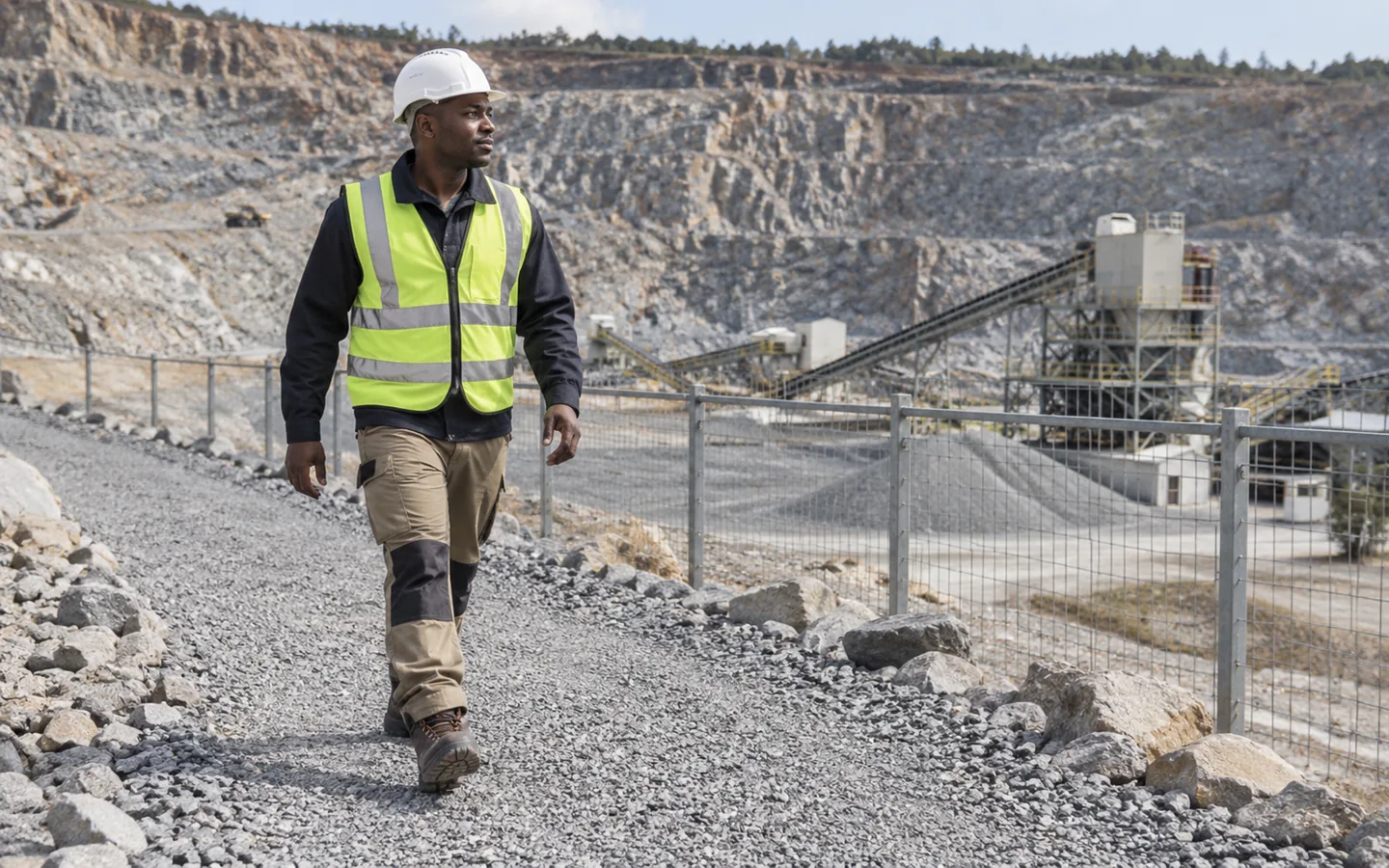
Mining footwear should be selected from a job-specific risk assessment, not from the word mining on a product card. Open-pit operations, processing plants, maintenance workshops and loading areas expose workers to different combinations of impact, penetration, uneven ground, water, heat, dust and long periods of walking or standing.
A B2B buyer therefore needs a structured specification that links each job role to protection, construction, fit and documentation. The following framework can be used to compare existing models or brief an OEM safety-footwear project.
1. Separate Mining Roles And Work Zones
Begin by listing the actual roles that will wear the footwear. Equipment operators, maintenance technicians, processing-plant workers and field personnel may work on different surfaces and face different hazards. One model may not be the best choice for every team.
Record whether work is indoors or outdoors, the walking distance, shift length, weather, water exposure, floor contamination and access to steep or irregular ground.
2. Map The Main Foot Hazards
Translate the site assessment into footwear requirements. Do not add a feature only because it sounds protective; every requirement should have a practical reason and model-level evidence.
- Falling tools, rocks or moving materials
- Sharp debris and penetration hazards
- Loose rock, mud, wet floors or oily workshop surfaces
- Water exposure and changing weather
- Heat-contact risk around selected processes or equipment
- Extended walking, climbing and standing
- Customer, contractor and destination-market requirements
3. Confirm Toe Protection
A protective toe cap is a core requirement for many mining roles. Steel and non-metallic options should be compared within the finished boot, considering the required standard, internal space, fit and complete product weight.
Do not select a composite toe solely because it is described as lightweight or metal free. Verify the exact model construction and documentation, especially when a fully metal-free specification is required.
4. Evaluate Puncture Resistance
Sharp rock fragments, wire, nails and maintenance debris can create penetration risks. Compare steel and non-metallic inserts according to the site requirement and the applicable marking.
Ask for the exact insert construction and relevant test or certification evidence. The phrase anti-puncture should not replace a model-specific specification.
5. Match The Outsole To The Ground
Outsole selection should reflect the actual walking surface. Tread design, outsole material and the complete footwear construction influence performance on loose ground, ramps, smooth plant floors and contaminated areas.
Slip-resistance markings describe defined test conditions, not a guarantee against every slip. A wearer trial on representative surfaces can help the buyer assess fit, movement and practical grip expectations.
6. Consider Water And Heat Exposure
Waterproof or water-resistant requirements should be stated precisely. A water-resistant upper, a waterproof construction and a rubber boot are not interchangeable descriptions. Confirm the required duration and type of exposure before choosing a model.
Where heat contact is a real hazard, request the relevant model marking and evidence. Do not apply HRO or a temperature claim to a boot unless the exact product documentation supports it.
7. Review Fit For Long Shifts
Mining footwear must combine protection with a workable fit. Review size range, toe room, heel hold, lining, insole, flexibility and finished-boot weight on the approved sample.
Use a controlled wearer trial with representatives from the intended job role. Comfort is subjective, so avoid unsupported promises such as fatigue free or all-day comfort for every worker.
8. Build A Mining Footwear Specification
A clear sourcing brief lets suppliers recommend a model without guessing.
- Mine type, work zone and job role
- Main impact and penetration hazards
- Ground, floor and contamination conditions
- Water, weather and heat exposure
- Required standard, class and additional markings
- Toe cap, midsole, upper and outsole preferences
- Size range, quantity, branding and packaging
- Sample, test and document requirements
9. Compare Uppers, Boot Height And Maintenance Needs
The upper and boot height should follow the exposure and movement requirements of the role. Leather type, textile panels, padding and closure design influence fit, cleaning and how easily workers can inspect the boot. A higher boot is not automatically safer for every role, and a low-cut shoe is not automatically more comfortable.
Ask how the proposed materials should be cleaned, dried and stored, then check whether those instructions are realistic for the mine. Replacement planning should consider visible wear, damage, outsole condition and site policy rather than an unsupported promise of a fixed service life.
10. Plan The Sample Evaluation
A useful sample review is more than a visual check. Confirm the model identifier, size, construction and requested markings, and compare them with the technical sheet. Select wearers from the actual job roles and record feedback using consistent criteria such as fit, heel hold, toe room, flex, grip expectations and ease of movement.
A sample trial does not replace certification or a workplace risk assessment. It helps the buyer identify fit or usability issues before production. If the sample changes after evaluation, record the revision and confirm whether the supporting test or certification scope remains applicable.
11. Evaluate The Sourcing Program, Not Only The Unit
Mining buyers should also review size distribution, packaging, identification, replacement availability and document control. These details affect site receiving, stock management and future repeat orders even when the footwear construction is unchanged.
For private-label or OEM orders, agree which party approves artwork, samples, test documents and production references. MOQ, sample timing and production lead time remain negotiable and depend on the selected model and customization requirements, so they should be confirmed in the quotation rather than assumed from a general article.
12. Approve Evidence And Samples Before Production
Match the model name, technical sheet, markings, sample and supporting documents before signing off the order. Any customized construction should be reviewed separately because material or component changes can affect testing.
Future Tech Ltd. supplies safety shoes and safety boots for industrial buyers and supports mining-focused OEM projects. Final suitability, certification scope, MOQ and lead times are confirmed from the buyer's specification rather than assumed from the industry name.