
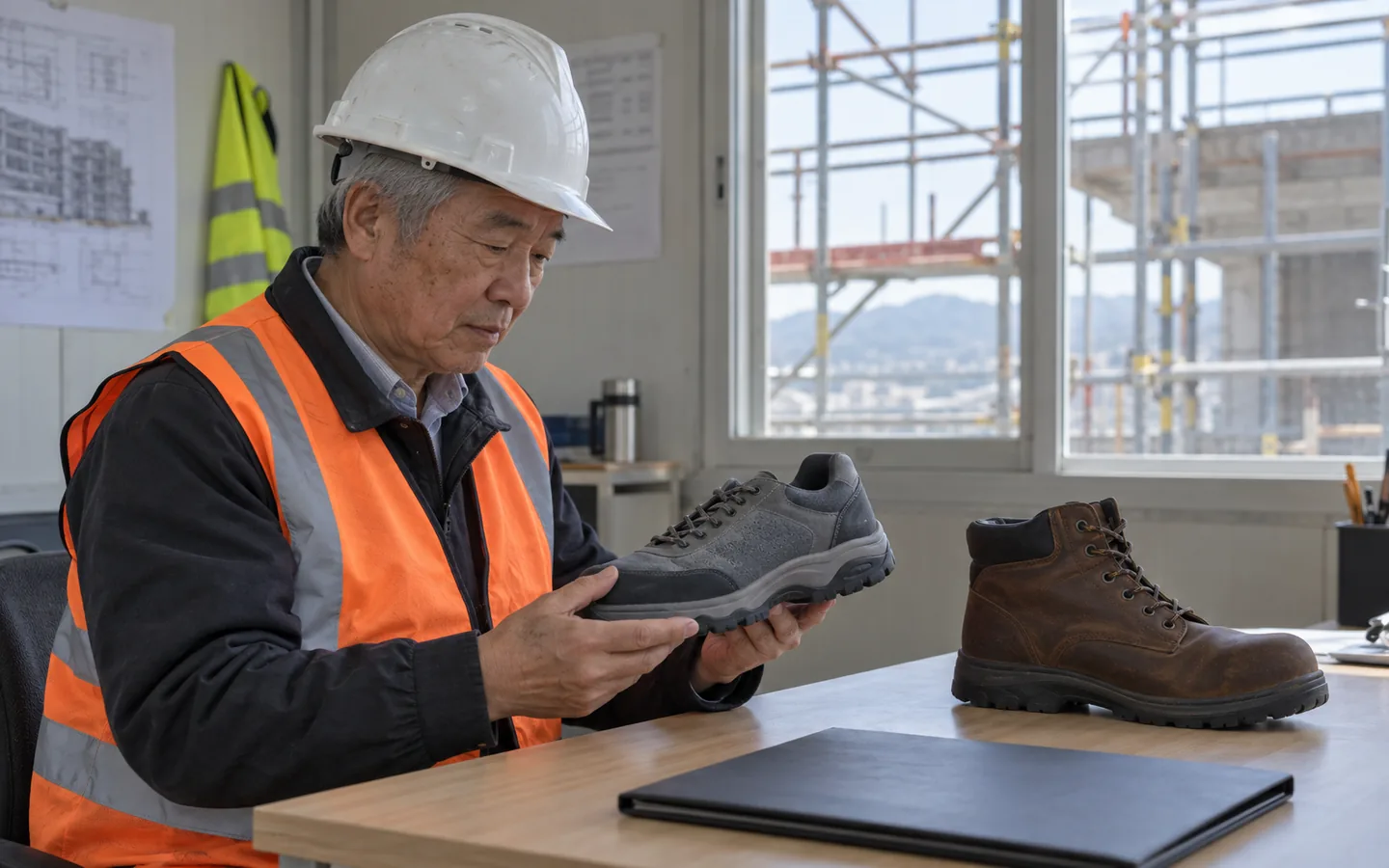
A construction project can include earthworks, material handling, outdoor installation and indoor finishing at the same time. Using one safety-footwear specification for every worker can hide important differences in ground, movement, weather and exposure. A better procurement process begins with the work being performed, then records the product requirements needed for that role.
This guide is for importers, distributors, contractors and safety buyers preparing a construction footwear program. It does not prescribe a universal boot or shoe. It explains how to turn site observations into a clear specification, evaluate a sample and confirm the final bulk-order configuration.
1. Start With The Construction Site Risk Profile
Construction safety footwear should be specified from the actual project conditions, not from the broad word construction. Temporary walkways, uneven ground, unfinished surfaces, delivery areas, indoor finishing zones and outdoor work can create different requirements on the same project. Record whether surfaces are dry, wet, loose, smooth, sloped or contaminated, and note how often workers move between them.
Material handling, dropped items, sharp debris, weather exposure and long walking routes should be considered by work area. The risk profile is not a certification claim; it is the buyer's starting point for asking a supplier to identify an appropriate model and supporting documents.
2. Match Footwear Specifications To Construction Roles
General site workers, material-handling teams, maintenance personnel, outdoor crews and indoor finishing teams may require different footwear specifications. A worker who moves across rough exterior ground may need a different format from a worker who remains in a controlled finishing area. Procurement teams should identify the role, surface, primary hazard and expected movement before comparing product cards.
A role-based program can still use a manageable product range. The goal is not to create a different SKU for every person, but to avoid treating distinct job risks as identical. Document which roles can share a specification and which require a separate review.
3. Safety Boots Or Safety Shoes?
Boot and shoe format should follow the work environment and the required configuration. A higher-cut boot can be evaluated where coverage, support or outdoor conditions are relevant, while a lower safety shoe can be evaluated where regular movement and a less bulky format are important. Neither format is automatically safer without reference to the finished model and the work task.
State the preferred format in the sourcing brief only after reviewing site access, movement, weather, surface and required components. For example, buyers can compare the available safety boots range with the S3 safety shoes category without assuming that every listed model has the same construction or marking.
- Role and work zone
- Indoor, outdoor or mixed exposure
- Walking and climbing pattern
- Required toe and midsole configuration
- Preferred boot or shoe format
4. Toe Protection: What Should Buyers Specify?
Construction buyers should specify the protection requirement and the model evidence required for the order, rather than selecting only from the words steel toe or composite toe. Both material types may be evaluated in the context of the finished shoe, internal fit, required documentation and any customer-specific metal-free requirement.
This is not a toe-cap comparison article. In a construction brief, the useful question is whether the selected model and configuration match the role's impact exposure and purchasing requirement. Record the selected component, model reference and documentation requirement for sample approval.
5. Puncture Protection For Construction Environments
Sharp debris, temporary work areas and changing site conditions can make penetration risk relevant for some construction roles. Buyers should ask what midsole construction is listed for the selected model and whether it matches the documented hazard. Material names alone should not be turned into a performance promise.
The brief should distinguish where midsole protection is required from areas where it is not. Confirm the exact model, selected construction and supporting information before bulk production, especially if an OEM change affects a protective component.
6. Outsole Selection For Construction Sites
PU, rubber and PU/rubber constructions are present in the current catalog, but the site should determine what buyers ask to evaluate. Ground texture, ramps, moisture, debris, expected temperature and transition between indoor and outdoor areas can all affect the outsole discussion. Do not select an outsole from material name alone.
Ask the supplier to identify the exact listed outsole construction and model documentation. The broader PU-versus-rubber guide can support a material discussion, while this construction guide keeps the decision tied to a defined site and work role.
7. Upper Materials And Outdoor Working Conditions
Leather, nubuck and other upper constructions should be reviewed for the work environment, cleaning approach, expected abrasion and wearer movement. Buyers should specify the required upper material only where it is supported by the project brief and the model record. A leather upper should not be described as universally waterproof, weatherproof or suitable for every outdoor condition.
For outdoor crews, record the actual exposure and care expectations. Confirm construction details on an approved sample rather than relying on catalog photography or a similar model.
8. Create A Role-Based Footwear Specification
A concise specification helps a buyer compare quotations and helps the supplier assess whether an existing model is appropriate. It should connect the role to the workplace, not merely list a product name. Keep the requirements traceable to the site assessment and avoid adding standards or performance claims that have not been confirmed for the chosen model.
- Job role and working area
- Working surface and primary hazard
- Toe and midsole requirement
- Outsole and upper preference
- Boot or shoe format
- Size range and order quantity
- Required documents and sample criteria
9. What To Check During Sample Evaluation
Review the sample against the written brief: fit, size, upper, stitching, outsole, toe and midsole configuration, finish and product identification. Where a workplace trial is appropriate, it can provide practical feedback about movement and fit. It does not replace the site risk assessment or model-specific technical evidence.
If the final order changes a material, outsole, component, logo or construction detail, record the change and confirm whether the original supporting documentation still applies. The approved sample should match the final production reference.
10. Construction Safety Footwear Procurement Checklist
Before a bulk order, check that the project roles, work surfaces, selected model, component configuration, size breakdown, sample comments and required documents are aligned. This creates a usable approval record for the buyer, supplier and site team. It also makes it easier to avoid applying one model's information to a different construction or role.
- Risk profile completed by work area
- Role-based specifications reviewed
- Model and construction identified
- Sample checked against the brief
- Documentation requested for the final configuration
- Bulk-order size mix and packaging confirmed
11. Working With A Safety Footwear Manufacturer
Future Tech can review existing safety shoes and safety boots against a confirmed construction sourcing brief, and can discuss OEM or ODM requirements for upper materials, sole materials, toe caps, midsoles, colours, logos and packaging. Final feasibility, documentation and production conditions are confirmed for the selected project.
Start with the construction roles, site conditions, target market, required components, sizes and quantity. This gives the supplier a practical basis for proposing an existing model or evaluating a new configuration.