
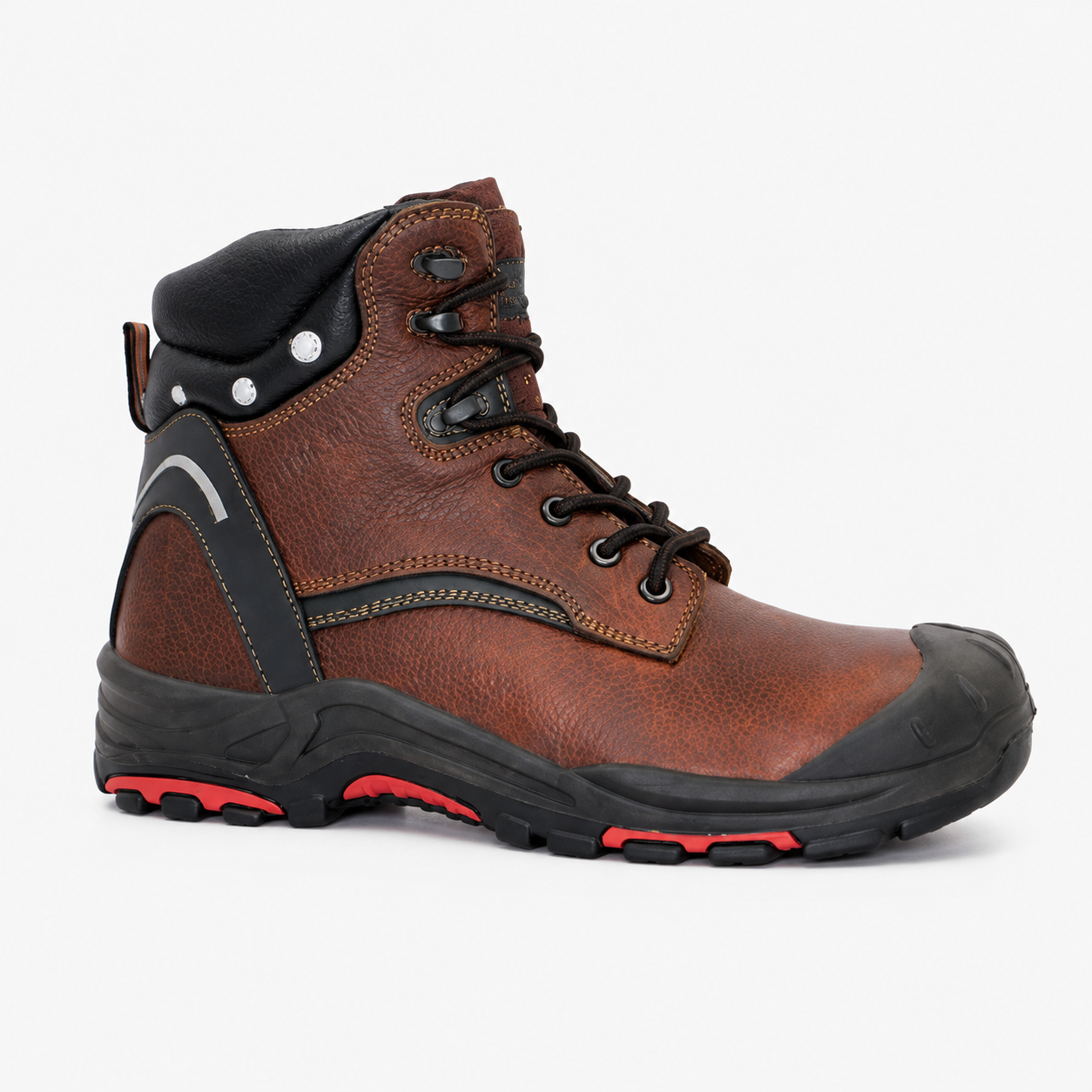
A bulk safety footwear order can fail on fit even when the model, materials and price have been approved. A size breakdown compiled from incomplete employee records, an unconfirmed conversion chart or a sample that does not match final construction can create avoidable exchanges and disagreements after delivery.
This guide is written for distributors, importers, industrial buyers and PPE teams. It is not a consumer shoe-size calculator. The objective is to establish an auditable sizing process that connects a real model, a real wearer group and an approved order record.
1. Why Bulk Sizing Needs A Separate Process
Fit affects wearer acceptance, issue management and repeat-order consistency. In a bulk program, a small uncertainty repeated across many pairs can become a material operational problem. The buyer should collect the size information early enough to validate it before packaging and production decisions are fixed.
The final fit depends on the model's last shape, internal construction, toe component, upper material and the intended wearer. It should not be assumed from a previous order of a different product.
2. Record Which Size System The Order Uses
EU, UK and US size references may appear in sourcing discussions, but a conversion table is only a starting point. Different manufacturers, lasts and product constructions can vary. Do not state that one EU size always equals a particular UK or US size.
The purchase file should name the size system used for the final order, how it will appear on the product and carton, and whether any customer-facing conversion reference is required. This gives all parties one controlled reference.
3. Consider Last Shape And Internal Fit
The last shape influences forefoot volume, heel hold and overall fit. A protective toe component and internal lining can also change the space a wearer experiences. Two products marked with the same nominal size may therefore not feel identical.
Ask for a physical sample of the selected model where the project justifies it. Compare the actual sample, not only an image or a related model, and record any fit observations before the size run is finalized.
4. Include Width And Wearer Profile In The Review
A size list should be reviewed alongside the wearer group and application. Width preference, sock choice, long periods standing, walking routes and the protective construction can all be relevant to fit. The goal is not to create a medical fitting program, but to avoid reducing the decision to a single number.
If the buyer needs a wider or otherwise different fit, put that request in the brief and ask whether the selected construction can be supplied and sampled. Do not presume that a general size range covers every fit requirement.
5. Prepare A Controlled Size Breakdown
Build the order breakdown from confirmed wearer data, using the selected size system. Keep version control: identify who collected the data, the date, the model reference and the quantity by size. This makes later changes visible before the supplier begins production.
A useful breakdown also notes any sample sizes requested, planned wearer trial and contingency quantities if the buyer's own policy requires them. Avoid changing a size distribution informally after sample approval.
- Selected model and final configuration
- Single agreed size system
- Quantity by size
- Sample size and wearer feedback
- Approved version and approver
- Carton and product marking requirement
6. Select Samples For The Actual Order
Sample selection should reflect the final model and likely wearer range. A single display sample may be useful for materials or appearance, but it may not answer fit questions across a workforce. Decide which sizes and roles need review before asking the supplier to arrange samples.
Where a wear trial is appropriate, give participants a defined review period and capture practical observations about fit and movement. The result should be recorded as procurement input, not described as a universal fit guarantee.
7. Confirm Size Information Before Production
Before bulk production, confirm the model, approved sample, final size range, size breakdown, branding, packaging and the documents that must accompany the order. This is the point to resolve any difference between an original size chart and the approved sample.
For OEM or private-label projects, a change to upper, lining, toe construction or outsole can affect the final product reference. Reconfirm the size approval when a material or construction revision is made.
8. Check Carton And Product Markings
Packaging and carton markings should use the same approved size system as the purchase order. Buyers should state how inner boxes, cartons and any labels need to identify the model, size and quantity. Consistent markings help receiving teams verify the shipment without relying on memory or a separate conversion table.
Review a packaging sample or artwork proof where marking is critical. Record the approved reference alongside the final size breakdown.
9. Align The Supplier, Buyer And Receiving Team
Sizing information is useful only when the people preparing the order, approving samples and receiving cartons use the same controlled record. Give the supplier the final breakdown and marking instruction, and ensure the receiving team can check the model, size system and carton quantities on arrival.
For distributor programs, retain this file with the product reference. It gives the next buyer a documented basis for replenishment instead of relying on an informal historical conversion or a generic size chart.
10. Treat A New Model As A New Fit Decision
A change from a low shoe to a boot, a different toe component, a revised lining or a different last can justify a new sample review even if the nominal size labels appear familiar. Keep the previous order as a reference, but do not let it override the fit evidence for the new model.
This approach is especially useful when an importer broadens a range for a new customer group. It keeps the size conversation tied to the footwear actually being ordered.
11. Clarify Exceptions Before Sign-Off
Before the order is released, identify any size that is unavailable, any requested conversion reference, any exception quantity and any unresolved sample observation. The buyer can then decide whether to revise the size run, obtain another sample or separate the affected item from the main order rather than leaving the issue to packing stage.
Written confirmation of those exceptions is useful for distributors and receiving teams. It distinguishes an approved variation from a packing error and preserves a clear reference if the same model is purchased again.
12. Reduce Repeat-Order Disputes
Retain the approved size file, model reference, sample decision and marking details for repeat orders. This gives the distributor or buyer a controlled baseline when a new workplace, model or wearer group is introduced.
A sizing process cannot eliminate every fit issue, but it can reduce avoidable ambiguity. The best result comes from matching the selected model and physical sample to the approved size record before bulk production.